
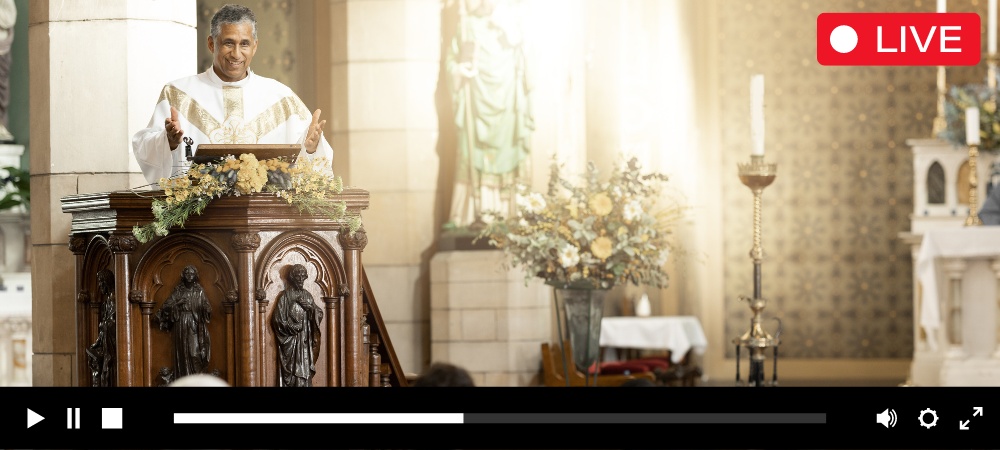
Church live streaming has become an effective way for churches to broadcast sermons, worship services, prayer meetings, and special events to people who cannot attend in person. With the right church live streaming setup, viewers can watch services in real time from their homes, while travelling, or from anywhere in the world.
Today, churches can live stream their services through social media platforms, dedicated church live streaming services, or their own websites and apps. The right choice depends on factors such as audience size, budget, viewing experience, engagement features, and how much control the church wants over its content.
In this guide, we’ll explore why church live streaming has become increasingly important, its benefits for congregations, how to develop an effective live streaming strategy, important features to consider, and some of the best church live streaming services available.
Table of Contents:
- Why Live Streaming Church Services?
- How to Develop a Church Live Streaming Strategy?
- Church Live Streaming Statistics and Trends
- Ways to Live Stream a Church Service
- Church Live Streaming Equipment Setup
- What to Look for in a Church Live Streaming Service?
- Best Church Live Streaming Services and Platforms
- Church Live Streaming Best Practices
- Conclusion
- Church Live Streaming FAQs
Why Live Streaming Church Services?
Church services have traditionally depended on people being physically present, but live streaming provides another way for congregations to participate. Members who are travelling, elderly, unwell, living away from the community, or otherwise unable to attend can still watch services and stay connected with their church.
Live streaming can also extend a church’s reach beyond its existing congregation. People discovering a church online can watch a service or sermon before attending in person, while existing members can continue participating even when they cannot be physically present.
Here are some of the key benefits of live streaming church services:
1. Spread the Word
- Evangelism: Live streaming provides a platform to spread the word of God, ensuring the church remains relevant and accessible.
- Reach Global Congregants: Extend your church’s reach beyond geographical limits, engaging followers worldwide.
2. Maintain Modern Relevance
- Adapt to Digital Expectations: Meet the expectations of a tech-savvy audience that values real-time, high-quality digital interactions.
- Engage Younger Generations: Attract and retain younger members who are more accustomed to digital media.
3. Monetize
- Additional Revenue Streams: Attract donations from a broader audience, offer virtual access to special events, and provide exclusive content to paying members.
- Support Church Activities: Use the additional funds to support various church initiatives and ensure the sustainability of your mission.
How to Develop a Church Live Streaming Strategy?
To effectively implement live streaming, churches need to develop a clear strategy. Consider the following:

1. Objectives
- What to Stream: Decide whether to broadcast sermons, entire services, or specific events.
- Purpose: Understand the primary goal of your live streaming efforts, whether it’s to engage existing members or attract new ones.
2. Cost
- Budgeting: Determine the costs involved, including necessary equipment (cameras, microphones, computers) and software for live streaming and video editing.
- Investment Levels: Live streaming can be relatively inexpensive or involve significant investment depending on the desired production quality.
3. Time and Resources
- Implementation Timeline: Assess when you need your live stream up and running, whether immediately or over a longer period.
- Staff and Volunteers: Evaluate your available resources, including staff and volunteers, to manage and operate the live streaming setup effectively.
4. Know Your Online Audience
Understanding who is likely to watch your church live stream can help determine the type of experience you need to provide. The audience may include existing congregation members who cannot attend in person, people living in other cities or countries, elderly members, families, or people discovering the church for the first time.
Consider when viewers are most likely to watch, which devices or platforms they commonly use, and whether they prefer watching services live or accessing recorded sermons later. Understanding these viewing habits can help churches make better decisions about their live streaming strategy.
VdoCipher live can help you stream your content live to your users. You can also engage with your audience with the chat feature.
Church Live Streaming Statistics & Trends
Here are some key statistics and trends that highlight the importance of live streaming in the context of church services:
Shifts in Religious Landscapes
- Decline in Catholic Population in Latin America: Historical data indicate that until the 1960s, at least 90% of Latin America’s population was Catholic. Today, only 69% of adults (425 million) identify as Catholic, with many joining Charismatic Catholic movements. Additionally, about 75 million Catholics have converted to the Charismatic Pentecostal movement.
- Technological Impact: These changes are largely attributed to advancements in communication technology over the past 50 years. The use of TV, the internet, and live streaming has been fundamental to the operations of Charismatic movements, enabling extensive outreach and engagement.
Online Engagement and Satisfaction
- Search for Religious Information: 30% of U.S. adults go online to search for information about religion, indicating a strong interest in digital religious content.
- Post-Pandemic Viewing Habits: After the pandemic, 27% of Americans continue to watch religious services on screens.
- Satisfaction with Online Services: Among U.S. adults who regularly watch religious services online or on TV, 67% report being extremely or very satisfied with those services.
- Increased Online Viewing: 22% of Christians now watch online church services more often than before COVID-19.
Adoption of OTT Live-Streaming Technology
- Building Online Communities: Many churches are building online communities that can transition into in-person attendance. In fact, 33% of churchgoers found their current churches online, underscoring the importance of live streaming.
- Preference for Online Services: About 20% of people have opted to view services online rather than in person one or two times. Furthermore, 16% have done so three to five times, and about 14% have chosen online services six or more times.
- Convenience and Comfort: Live streaming allows worshipers to join services on their phones, with 44% of people preferring to be alone while they pray and worship. This flexibility enables users to engage in religious services from the comfort of their own space.
Financial Contributions
- Ease of Online Donations: Online platforms for live streaming can also facilitate donations. Reports show that over $2.2 billion worth of donations to nonprofits were made online in 2015, demonstrating the potential for churches to receive financial support through digital channels.
Ways to Live Stream a Church Service
Live streaming your church service can be done with a simple setup using platforms like YouTube and Facebook or with a more advanced setup using professional equipment and software. Here’s how you can do both:
Simple Setup
If you need to start streaming quickly and with minimal equipment, follow these steps:
- Facebook Live
- Setup: Stream live from your mobile device or computer.
- Steps: Go to your church’s Facebook page, click on the live video option, and follow the instructions.
- YouTube Live
- Requirements: You need at least 1,000 subscribers to stream from a mobile device.
- Steps: Access YouTube Studio, select “Go Live,” and follow the prompts to start your live stream.
- Tripod Mounts
- Importance: A tripod ensures your video is steady and consistent.
- Options: Use smartphone or tablet tripods to hold your device during the service.
- Additional Gear
- Microphones: Enhance audio quality with external microphones.
- Lighting: Improve video quality with proper lighting.
Note: This simple setup is ideal for getting started quickly but consider upgrading to a more stable and professional setup for long-term use.
Professional Setup
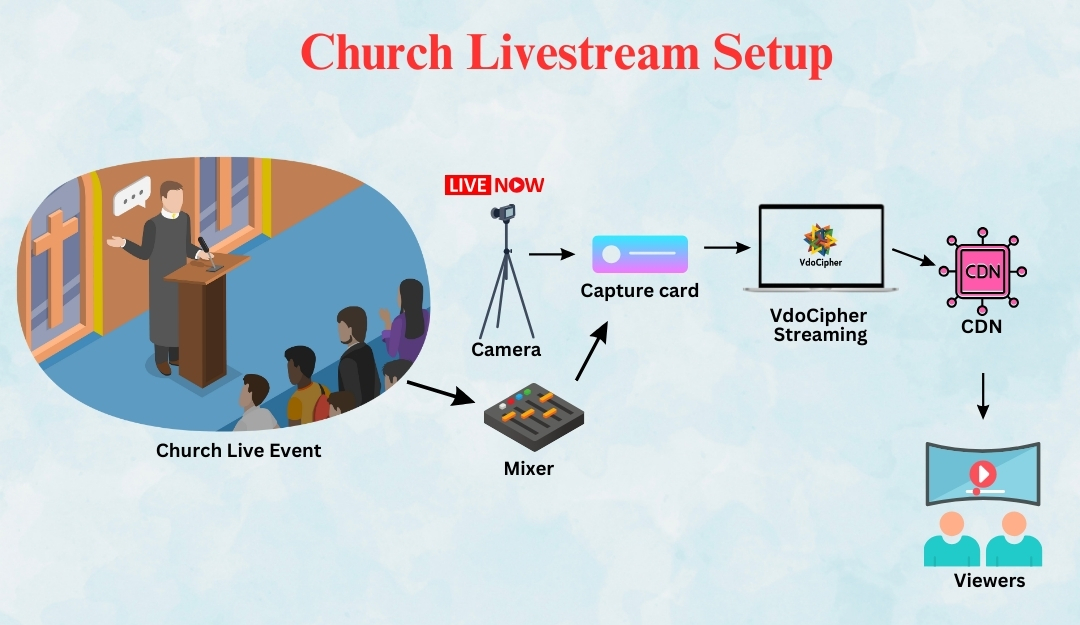
For a more professional and stable live streaming setup, you will need additional hardware and software. Here’s how to do it:
- Hardware Setup
- Cameras: Use webcams, DSLRs, or video cameras.
- Audio Equipment: Connect your sound system to an audio interface for better sound quality.
- Streaming Software
- OBS Studio: A free and popular option for live streaming.
- VMix: Offers various pricing options based on features.
- Wirecast: Highly flexible but more expensive.
- Zoom: Many to Many options that can later be embedded and streamed to thousands.
- Steps to Set Up
- Connect Your Camera: Use USB or HDMI cables to connect your cameras to your computer.
- Connect Your Audio System: Use XLR cables to connect your soundboard to an audio interface, then to your computer.
- Configure Streaming Software: Add your video and audio sources to the software and set up your streaming destinations like YouTube or for a more robust streaming solution, consider using a service like VdoCipher, which offers high-quality and scalable live streaming.
- Additional Enhancements
- Multiple Cameras: Use more than one camera for different angles.
- Testing: Do a test run to ensure everything works correctly before the actual service.
- Go Live
- Start Streaming: Once everything is set up and tested, start your live stream and monitor it to ensure quality.
By following these steps, you can set up a live stream for your church service, starting with a simple and quick method and moving towards a more professional and stable setup as you grow more comfortable with the process. This will help you reach a wider audience and provide a high-quality worship experience.
Church Live Streaming Equipment Setup
Setting up live streaming for church services involves selecting the right equipment and ensuring it all works together seamlessly. Here’s a straightforward guide to help you get started.
Key Components of Church live streaming
- Audio/Video
- Encoding
- Internet
Camera
- HDMI Cameras
- Webcams
- SDI, Professional & PTZ Cameras
Microphone
- USB & XLR Microphones
- Wireless Lapel Mic: Ideal for Mobile pastors.
Capture Device
- Internal Capture Devices: Installed in the computer’s PCI slot.
- External Capture Devices: Connect via HDMI, Thunderbolt, or USB.
Hardware
- PC
- Mac
- Laptop
Audio
- Microphones and Mixers: Use your existing sound system.
- Digital Audio Mixer: Choose one with enough inputs and AUX outputs for streaming.
Video Mixers
- A/B Switcher which switches between inputs to one output channel.
- Mixer/Effects (M/E) Video Switcher which adds overlays, transitions, and effects.
Cameras High-Quality Options
- Blackmagic Design URSA Mini Pro 4.6K G2
- Panasonic AG-DVX200
- Sony PXW-Z90V
- Canon XA11
- Panasonic HC-V770
- Sony FR7 Cinema Line PTZ Camera Kit
- PTZOptics 20X-SDI
- Sony SRG-300SE
Microphone Options
- Shure SM57
- Shure SM7B
- Telefunken M80
- Sennheiser MD 421-II
Audio Mixers Options
- Behringer X32
- Yamaha MG10XU
- Zoom LiveTrak L-12
- Behringer FLOW 8
What to Look for in a Church Live Streaming Service?
Choosing the right church live streaming service depends on your audience, budget, and the kind of viewing experience you want to provide. Here are some important factors to consider:
1. Ease of Use
The platform should be simple enough for church staff and volunteers to manage live broadcasts without requiring extensive technical knowledge.
2. Reliable Streaming
A church service happens at a scheduled time, so reliable playback is essential. Look for a service that provides a consistent viewing experience across different devices and internet connections.
3. Audience Capacity
Your online audience may increase significantly during Christmas, Easter, conferences, or special events. Choose a service that can accommodate both regular and peak viewership.
4. Live Audience Engagement
Features such as live chat can help remote congregation members participate and feel more connected during sermons, worship sessions, and other church events.
5. Recording and On-Demand Viewing
A good church live streaming service should make it easy to keep recorded services available for people who cannot watch live. Over time, this can also help build a library of sermons, Bible studies, and other church content.
6. Analytics and Pricing
Viewer analytics can help churches understand audience engagement and improve their streaming strategy. At the same time, consider whether the pricing and included features are suitable for your congregation size and expected streaming usage.
The best church live streaming service should ultimately provide a reliable and convenient experience for both the church and its online congregation.
VdoCipher recently launched an HD Live Streaming Solution which allows you to replay, rewind and pause your live streams with chat. Go check out VdoCipher live now!
Best Church Live Streaming Services & Platforms
There are several options available for churches looking to live stream their services, ranging from social media platforms to dedicated live streaming services. Each offers different advantages depending on the size of the congregation, desired features, budget, and viewing experience.
Here are some of the popular church live streaming services and platforms to consider:
VdoCipher LiveStream
Overview
VdoCipher enables churches to stream their services live globally with ease. It supports integration with your website or app within minutes and offers robust engagement features like authenticated and anonymous chat.
Features
- Scalable Streams: Support for up to 100,000 viewers in a single session.
- Multiple Streams: Perform up to 5 live streams in parallel with a single account.
- Chat for Viewers: Engage with your congregation through anonymous or authenticated chat.
- API Integration: Automatically start and end streams using VdoCipher’s API.
- Automatic Recording: Streams are automatically recorded and saved, with options to embed DRM-protected videos.
- Compatibility: Integrates with OBS and other broadcasting tools using a streaming URL and key.
Google Meet
Overview
Google Meet is widely used for virtual meetings and can be an effective live-streaming tool for churches, especially for smaller gatherings and interactive sessions.
Features
- Real-Time Captioning: Includes real-time and translated captions.
- Scalability: Suitable for one-on-one calls or large web conferences.
- Integration: Seamlessly integrates with other Google services.
Zoom
Overview
Zoom is a versatile platform widely used for online meetings and webinars, with live streaming capabilities suitable for church services.
Features
- Live Streaming: Stream to YouTube, Facebook, Twitch, and custom RTMP destinations.
- Engagement Tools: Breakout rooms and virtual backgrounds.
- Limitations: No monetization options and limited branding customization.
Cisco Webex
Overview
Cisco Webex is ideal for professional and enterprise use, providing high-security standards and high-quality video conferencing.
Features
- High Security: Ensures secure live streaming.
- Interactive Tools: Screen sharing, whiteboarding, and integration with business tools.
- Live Streaming Integration: Stream to Facebook Live, YouTube Live, and more.
Ustream (IBM Cloud Video)
Overview
Ustream offers end-to-end streaming solutions, from video hosting to analytics, suitable for churches looking for a comprehensive platform.
Features
- AI-Driven Features: Includes automated speech-to-text and deep video search.
- Mobile Compatibility: Supports mobile streaming.
- Developer APIs: Customize player UI and analyze engagement with APIs.
AWS (Amazon Web Services)
Overview
AWS offers robust live streaming solutions through its Media Services, ideal for churches needing scalable and reliable streaming.
Features
- Scalability: Automatically scales to handle large audiences.
- Reliability: Built on AWS’s global infrastructure for high availability.
- Customization: Extensive options for customization and integration with other AWS services.
GCP (Google Cloud Platform)
Overview
Google Cloud Platform provides comprehensive live streaming solutions with high scalability and integration with Google’s ecosystem.
Features
- Scalability and Performance: Handles large-scale streaming with low latency.
- AI and Analytics: Advanced AI features for real-time analytics and viewer engagement.
- Integration: Seamless integration with other Google services and tools.
Twitch
Overview
Twitch is a leading live streaming platform originally designed for gamers but also supports various other content types like music, art, and talk shows.
Features
- Massive Audience: Over 140 million monthly active users, particularly popular among the 18-34 age demographic.
- Community Building: Strong interactive features for viewer engagement.
- Versatility: Supports multiple content types beyond gaming, such as cooking and creative arts.
YouTube Live
Overview
YouTube Live is part of the broader YouTube ecosystem, making it easy for churches to broadcast live events and integrate with pre-recorded content.
Features
- Diverse Audience: Reaches a global audience across all age groups.
- Versatility: Suitable for various content types including gaming, education, tech reviews, and live events.
- Integration: Seamless integration with YouTube’s vast video library.
Facebook Live
Overview
Facebook Live leverages Facebook’s extensive user base to broadcast live to friends, groups, and followers, making it highly accessible.
Features
- Wide Reach: Over 2.8 billion monthly active users, effective for reaching a diverse audience.
- Engagement Tools: Live chat, Q&A sessions, and integration with Facebook’s business tools.
- Versatility: Ideal for community events, live tutorials, and business promotions.
Instagram Live
Overview
Instagram Live is a feature within the Instagram app that allows real-time broadcasting, particularly popular among influencers and brands.
Features
- Real-Time Engagement: Interactive features like comments and likes.
- Youth Appeal: Significant user base among 18-29-year-olds.
- Niche Focus: Excels in fashion, beauty, fitness, and lifestyle content.
By selecting the right live-streaming solution, churches can effectively reach and engage with their congregation, providing a high-quality and immersive experience for viewers.
Church Live Streaming Best Practices
A successful church live stream should provide a welcoming and reliable experience for people watching remotely. A few simple practices can help improve the quality and consistency of your online services:
- Prioritize clear audio: Viewers should be able to clearly hear sermons, prayers, music, and other parts of the service.
- Test before going live: Check the audio, video, and stream before every service to avoid interruptions.
- Maintain a consistent schedule: Streaming services at regular times makes it easier for your online congregation to participate.
- Engage online viewers: Welcome remote viewers and use features such as live chat to make them feel included in the service.
- Make services available later: Keep recordings of sermons and important services available for people who cannot watch live.
- Review viewer engagement: Use available analytics and feedback to understand what is working and improve future broadcasts.
The goal should be to make the online viewing experience feel like an extension of the church service rather than simply a video broadcast.
Conclusion
Church live streaming provides an effective way for churches to stay connected with their congregation and reach people beyond their physical location. From regular worship services and sermons to prayer meetings and special events, live streaming can make church content accessible to people wherever they are.
Choosing the right church live streaming service depends on factors such as audience size, reliability, engagement features, on-demand availability, and budget. Rather than focusing only on the platform itself, churches should consider the overall experience they want to provide to their online congregation.
With the right live streaming service and a consistent approach, churches can create an online experience that complements in-person worship and helps their community stay connected.
Church Live Streaming FAQs
What is church live streaming?
Church live streaming is the real-time broadcasting of worship services, sermons, prayer meetings, and other church events over the internet. It allows people to participate remotely through a website, app, social media platform, or dedicated live streaming service.
What is the best platform for church live streaming?
The best church live streaming platform depends on the church’s audience, budget, and requirements. Social platforms can be useful for reaching a wider audience, while dedicated live streaming services may offer greater control over the viewing experience, audience engagement, recordings, and analytics.
Can a church live stream services for free?
Yes. Platforms such as YouTube and Facebook provide options for live streaming without a dedicated streaming subscription. Churches looking for additional features, greater control, or a customized viewing experience can also consider paid church live streaming services.
Can church services be watched after the live stream ends?
Yes. Many live streaming services allow broadcasts to be recorded and made available for on-demand viewing. This allows people who missed the live service to watch sermons, worship sessions, and other church events later.
What should churches look for in a live streaming service?
Important factors include ease of use, streaming reliability, audience capacity, viewer engagement features, recording and on-demand viewing, analytics, and pricing. The right choice should match the size and requirements of the congregation.
How can churches increase engagement during live streams?
Churches can acknowledge their online congregation during services, encourage participation through live chat, maintain a consistent streaming schedule, and make previous sermons and services easily accessible online.
Supercharge Your Business with Videos
At VdoCipher we maintain the strongest content protection for videos. We also deliver the best viewer experience with brand friendly customisations. We'd love to hear from you, and help boost your video streaming business.


My expertise focuses on DRM encryption, CDN technologies, and streamlining marketing campaigns to drive engagement and growth. At VdoCipher, I’ve significantly enhanced digital experiences and contributed to in-depth technical discussions in the eLearning, Media, and Security sectors, showcasing a commitment to innovation and excellence in the digital landscape.