
The creator economy is now a multibillion-dollar industry, building the careers of some of the biggest celebrities. This generation of micro-entrepreneurs is estimated to reach $104.2 billion in 2022. Today creators have become increasingly professionalized in their approach to producing content and managing their careers. Global brands and corporations have learned to use this new media environment as an advertising and sales channel. Successful content creators are often compared with film stars and celebrities because of the fame and admiration they earn among their fans and followers. The viewers have a more personal connection to the creators than previous era stars.
“A content creator is an individual who uses their influence, skills, and creativity to amass and monetize an audience online.”
Table Of Content:
- Who is a content creator?
- Key Creator Economy Statistics 2026
- Historical Evolution of the Creator Economy
- Factors contributing to the rise of the creator economy
- The benefits of working with creators
- eLearning Creator Economy
- OTT Creator Economy
- Creator Economy Market Size & Statistics
- Why do Creators need secure video hosting and video protection?
- Content Creators and Social Media Platforms
- Types of content produced by creators
- Creator Economy Business Models: How Creators Make Money
- Future of the Creator Economy
- Latest in the Content Creator Economy
- Recent Shifts in the Creator Economy
- How AI Is Changing the Creator Economy
- FAQs
What is Content Creator Economy?
The creator economy is a term to describe the growing trend of content creators, curators and community builders making a living off of their online creations. It can include everything from YouTube videos and podcasts, creating and selling online courses, social media influencer marketing, and blogging. It also includes other businesses supporting the creators, such as analytic platforms, video hosting services, and advertising firms. There has been a big rise in the number of tools to create, share, monetize and gain an audience. Creators are rising, and anyone can now create and contribute to the creator economy.
Explore More ✅
VdoCipher ensures Secure Video Hosting with Hollywood Grade DRM Encryption
VdoCipher helps over 2500+ customers in over 40+ countries to host their videos securely, helping them to boost their video revenues.
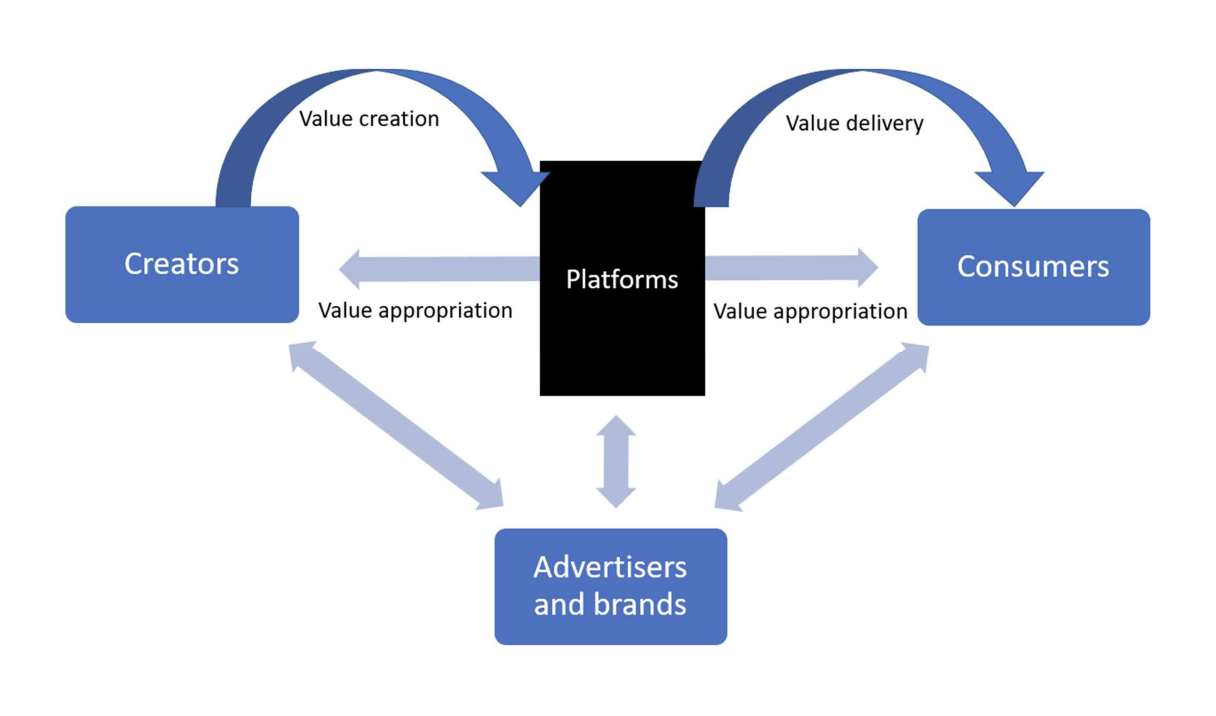
The major components of a creator economy are
- Creators
- Consumers or Target Audience
- Platforms (to create, distribute, consume and monetize content)
- Prospective Businesses and Brands
- Tools & Services to assist in content creation
According to the payment company Stripe, “the number of creators went up by 48% in 2021, compared to 2020 on its 50 most popular creator platforms. If this exponential growth continues, these 50 platforms in themselves will contribute to 15.5 million creators in five years”.
Who is a content creator?
A content creator produces and shares written, visual and entertaining content, usually digital. Content creators is a broad term covering different works and mediums to disperse the work. In this blog, the term “content creator” refers to someone focused on creating content to target an interested specific audience and connect with them.
The content produced is mostly original and commonly includes YouTube videos, blogs, social media posts, and much more. The content distribution is via social channels like Instagram, YouTube, personal websites, and more.
Content is the soul of creators, and the focus is on creating fresh content or adding value that interests, informs, and educates their audience. Each content field requires creators to have the proficiency to thrive and earn, including good communication, proper knowledge, and engaging content delivery.
Key Creator Economy Statistics 2026
The creator economy is now a major digital business ecosystem, with creators earning through ads, sponsorships, subscriptions, paid communities, online courses, digital products, merchandise, newsletters, and independent platforms.
| Metric | Latest Figure |
| Global creator economy market size | Around $250B+ in 2025/2026 |
| Goldman Sachs projection | Around $480B by 2027 |
| Grand View Research estimate | $252.33B in 2025, projected $1.34T by 2033 |
| Coherent Market Insights estimate | $248.95B in 2026, projected $1.05T by 2033 |
| India creator economy | 2–2.5M monetized creators influencing $350–400B in spending |
| YouTube India impact | ₹16,000 crore GDP contribution and 930,000+ jobs in 2024 |
| Substack | 5M+ paid subscriptions |
| Influencer marketing | Continued growth as brands increase creator-led campaigns |
Market-size estimates vary because some reports include influencer marketing, creator tools, platforms, subscriptions, commerce, advertising, and creator-led businesses, while others count only narrower creator revenue. Still, the broader direction is clear: the creator economy is already worth over $250 billion globally and is expected to grow strongly over the next decade. Goldman Sachs projected the creator economy could reach $480 billion by 2027, while Grand View Research and Coherent Market Insights project the market could cross $1 trillion by 2033.
In India, creators are also becoming a serious economic force. BCG estimates India has 2-2.5 million monetized creators influencing $350–400 billion in consumer spending, while YouTube’s creative ecosystem contributed over ₹16,000 crore to India’s GDP and supported more than 930,000 full-time equivalent jobs in 2024.
Historical Evolution of the Creator Economy
Early 2000s – Birth of Blogging and Independent Publishing
People began publishing personal blogs, tutorials, reviews, opinions, and niche content online. Platforms like Blogger and WordPress made it easier for individuals to create content without traditional publishers. Monetization was mostly through ads, affiliate links, and early sponsorships.
Mid-2000s – Rise of YouTube and User-Generated Video
YouTube launched in 2005 and made online video creation mainstream. Creators could upload videos, build audiences, and later monetize through the YouTube Partner Program. This phase created opportunities for vloggers, educators, reviewers, gamers, and entertainers.
Late 2000s – Social Media and Influencer Culture
Social platforms helped individuals build public followings and online communities. Creators started becoming influencers, and brands began working with them for sponsored posts, product placements, and affiliate campaigns.
Early 2010s – Mobile-First Content Creation
Smartphones and mobile internet made content creation faster and easier. Photos, short videos, stories, and real-time updates became popular. Platforms like Instagram, Snapchat, and Vine helped shape visual-first creator culture.
Mid-2010s – Direct Fan Monetization
Creators started earning directly from their audiences through memberships, subscriptions, crowdfunding, donations, and fan-support models. Platforms like Patreon and Twitch helped creators reduce dependence on ads and sponsorships.
Late 2010s – Expansion of Creator Tools
Creators began using tools for design, editing, analytics, newsletters, payments, online courses, communities, and eCommerce. This period helped creators operate more like small businesses instead of only content publishers.
Early 2020s – Mainstreaming of the Creator Economy
The pandemic accelerated online content consumption, livestreaming, online learning, and short-form video. More people started creating content as a side income or full-time career. TikTok, Instagram Reels, YouTube Shorts, Twitch, Substack, and online course platforms grew rapidly.
Mid-2020s – From Creators to Creator Businesses
Creators began moving beyond platform-dependent income. Many launched paid communities, newsletters, courses, merchandise, digital products, consulting offers, independent websites, apps, and premium video libraries.
2025–2026 – AI, Creator Commerce, and Premium Content
AI tools started helping creators with ideation, scripting, editing, translation, dubbing, repurposing, and analytics. At the same time, creators became more focused on direct monetization, paid communities, creator-led products, subscriptions, and premium content.
Future Phase – Creator-Owned Media and Infrastructure
The next phase of the creator economy is likely to focus on creator-owned platforms, direct audience relationships, secure video delivery, advanced analytics, AI-assisted production, regional-language content, and better monetization infrastructure.
| Period | Milestone | Key Platforms / Tools |
| Early 2000s | Blogging and independent publishing began | Blogger, WordPress |
| Mid-2000s | YouTube and user-generated video became mainstream | YouTube, Vimeo |
| Late 2000s | Social media created influencer culture | Facebook, Twitter, YouTube |
| Early 2010s | Mobile-first and visual content expanded | Instagram, Snapchat, Vine |
| Mid-2010s | Direct fan monetization became popular | Patreon, Twitch, Kickstarter |
| Late 2010s | Creator tools and online course platforms grew |
Substack, Shopify, Teachable, Canva
|
| Early 2020s | Pandemic accelerated creator economy growth |
TikTok, Reels, YouTube Shorts, Twitch
|
| Mid-2020s | Creators became full creator businesses |
Patreon, Substack, Shopify, Discord, Circle
|
| 2025–2026 | AI, creator commerce, and premium content expanded |
ChatGPT, CapCut, Runway, YouTube, Substack
|
| Future | Creator-owned platforms and secure infrastructure |
Creator apps, OTT platforms, DRM video hosting
|
Factors contributing to the rise of the creator economy
There are several factors that contribute to the rapid growth in creator space and boost the creator economy. Some of these common factors include
The rise in internet usage and the globalization of content consumption
According to datareportal insights, by the start of April 2021, over 300 million people worldwide started using the internet in the past 12 months. The annual change in the number of global internet users is more than 7.6%. The demand for creative content will likely grow with the world becoming more digitized.
With wider internet access, the market gap between the supply and demand side of the creator economy narrows. Wireless infrastructure and last mile internet reach are surely giving an economic boost to localized content to reach a global audience. In the next few years, we will likely see high volume growth in the creator economy.
“Number of creators on the 50 most popular creator platforms stands at 668,000.”
Disruption in formal employment opportunities
Ever since the pandemic outbreak, there have been massive job losses and an increase in countless job-seekers. Fresh graduates had to sit idle at home. Some of them jobless and creative artists became overnight sensations. In 2021 itself, the 50 million creator economy escalated to $14 billion. Creators now look for additional revenue sources and flexible job culture empowered by remote work technologies.
Many small businesses collaborate with influencers and online creators to boost brand visibility and attention. By leveraging these influencers’ voices and reach, many could ensure business continuity and increase their sales. In fact, boosting the creator economy is the dire need to compensate for the lack of formal job opportunities.
- YouTube is considered the birthplace of the creator economy, and a report outlined its contribution to the YouTube Partner Program (YPP).
- Oxford Research found that YouTube’s creative ecosystem supported 394K equivalent jobs in the United States in 2020, paying over $30 billion to creators, artists, and media companies.
The popularity of short-form video content
Video is now the most popular form of content on the internet, and people are continuously looking for new and interesting videos to watch. People love short-form video content as it is easy to consume and can be watched on any device. People watch short-form videos while on the go and are also more likely to share them with their friends. You can learn or get a good laugh within minutes by watching reels or short videos.
Explore More ✅
VdoCipher – Secure Video Hosting for Premium Content Creators
VdoCipher helps content creators and business from more than 120 countries in securing their videos from piracy.
“53% of content creators’ fans say that their ideal length for a video is under 5 minutes.”
- According to a HubSpot report, 85% of marketers consider short videos as the most effective video format on social media. In 2022, brands will focus more on short-form educational videos focused on how-to’s, DIYs, and explainer videos.
- People are increasingly turning to short online videos for entertainment, news, and even education. More and more students and teachers are using short-form educational videos to supplement traditional classroom instruction.
An increasing number of creator economy platforms and tools
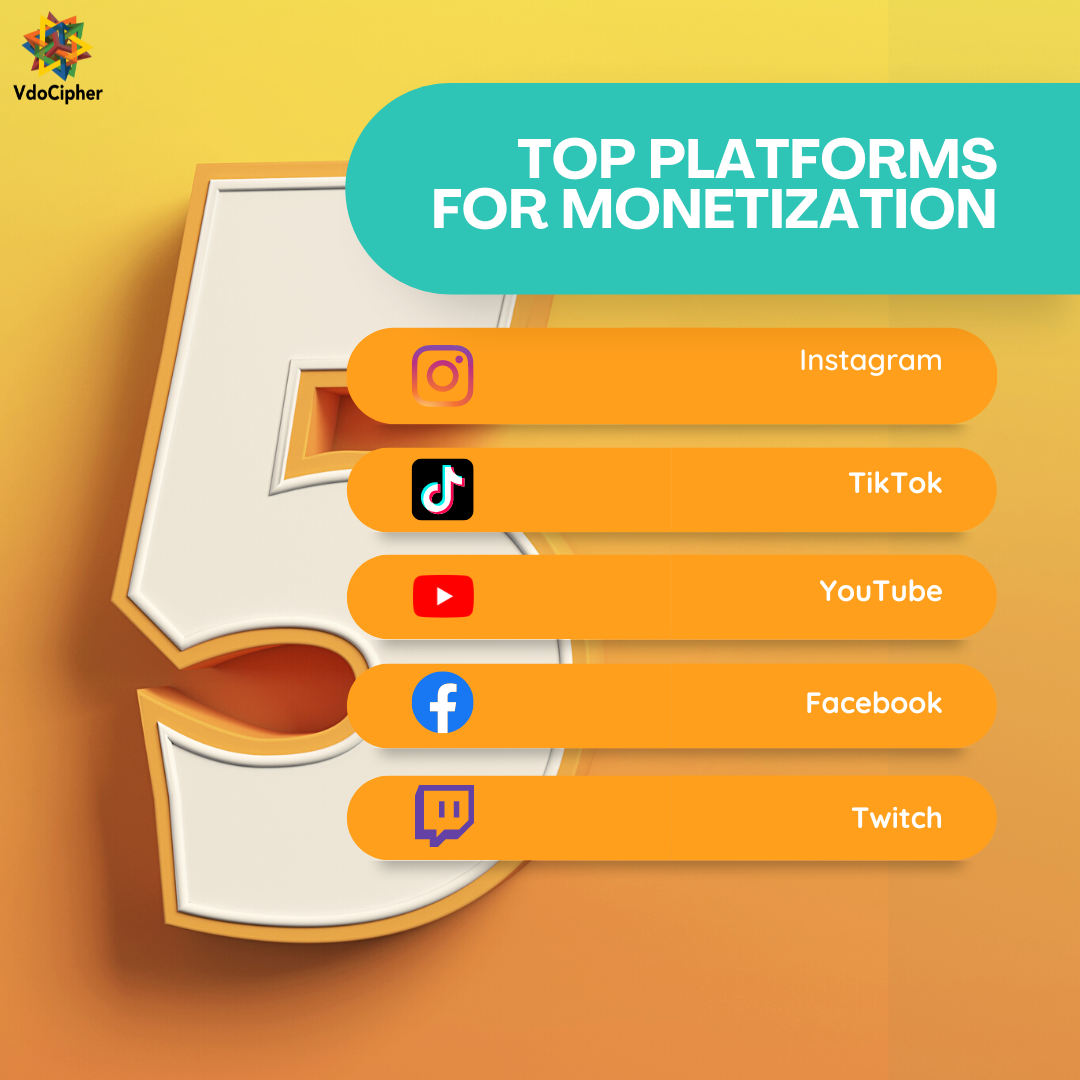
A lot of content creators look for different ways to monetize their work. Now there are many monetization platforms helping creators earn a decent income from their work.
- One of the most popular monetization platforms is YouTube. You can create videos and then monetize them through ads. You can even join the YouTube Partner Program, which gives you a share of the revenue from the ads shown on your videos.
- Educators now possess multiple no-code and easy solutions like LMS to create, integrate and monetize their educational content.
- Video security mechanisms like DRM, which used to be available only for Google and Apple, are now available to everyone through Authorized license partners like VdoCipher. Earlier the creators had no option to tackle their video piracy problem and eventually had to face revenue loss.
- Another popular monetization platform is Patreon. With Patreon, you can create content and ask your fans to support you by becoming patrons. It may be a good earning source if you have a large audience base.
- Several platforms also specialize in selling digital products, such as ebooks, courses, and other types of content. These platforms can be a great way to monetize your work if you have something of value to sell. Find the right platform for your content, experiment with free templates, and see what works best for your specific situation.
“Nearly 41% of creators make a liveable wage from their content at $50k in annual income or higher.”
Many creators are moving beyond popular earning models like sponsorships and Patreon towards new and innovative monetization methods. Be it NFTs or workshops or developing own brand into a full-scale business. Not all models seem to prove successful, but some certainly will.
Bond of trust between Creators and Audience
Creators have become the key players for brands to reach targeted audiences. Many creators build their audience on social media by promoting their knowledge and talents. Their admiration or reputation roots in their creativity and unique individuality. Multinational companies engage with the mass audience with unique campaigns involving famous creators instead of big celebrities. Creators now have the power to connect with unrepresented groups and nations, which is a big opportunity for creators and companies.
Communicating with creators can take many forms, including leaving comments, sending messages, or following their social media handles. When fans take the time to communicate with creators, it shows that they are invested in what they are doing and that they are willing to support them. This can go a long way in building trust between fans and creators.
In some cases, the close relationship and bond of trust between fans and creators allow for the wrong transmission of inaccurate and misleading information. Some creators even take undue advantage of the trust fans put in their favourite creators. There have been plenty of examples of content creators propagating wrong and conspiracy theories.
“44% of fans feel they know their favourite creators, as well as they know their real-world friends.”
Investment in creative content
Investing in high-quality creative content is wise for businesses of all sizes regardless of whether your business is about SEO link building software or eCommerce. After all, compelling content is one of the most effective ways to reach and engage your target audience. It helps build trust and credibility, drive your website or business traffic, and generate leads and sales. Creators and businesses (especially after announcing ChatGPT), sometimes rely on AI content tools. Our advice will be to use also AI Detector tools to ensure that your content looks human-like and will be perceived positively by your audience. It’s also possible to create captivating AI art effortlessly with the use of AI art generator tools, but you may still need a graphic artist to develop brand-ready images. Since 2020, venture capital has invested $850 million into the creator economy.
The growing number of unicorns in the creator economy shows the huge potential for venture capital investors, startup founders, and creators. This type of investment into the creator space sends a strong message that the creator economy is a big force to be reckoned with. According to Crunchbase data, funding for startups focused on creative content in 2021 was $939 million.
“The actual rate an advertiser pays per view on YouTube is between $0.003 to $0.005, which means a YouTuber receives nearly $3 to $5 per 1000 views”
Creators are doing what they like to do and are best at what they do while delegating out the things they are not good at. There is a need for other tools to help creators run their work, such as hosting videos, managing revenue, contacting brands and businesses, hiring resources and more.
- LinkedIn announced a $25 million fund via its Creator Accelerator program
- Pinterest built monetization tools and launched a $500,000 creator fund
- YouTube added a $100 million fund just for Shorts, its TikTok-like feature
- In 2020, TikTok, after a $200 million fund, launched new monetization features
Creator Economy Ecosystem
The Benefits of working with Creators
Enhanced Return on Investment
Among marketers who implement influencer marketing strategies, approximately 25% report it as having the second-highest return on investment (ROI) compared to other marketing approaches. In the B2B sector, influencer marketing is particularly potent, yielding an ROI that is eleven times greater than that of traditional advertising methods. This strategy is especially effective in influencing Generation Z consumers, with one-third reporting purchases based on influencer endorsements within a recent three-month period.
Expanded Reach and Brand Awareness
As organic reach diminishes on social media platforms—which promote a pay-to-play model—the importance of influencer collaborations becomes increasingly crucial. For example, by July 2022, the average organic reach for Instagram posts by brands had fallen to 13.51%, a decrease of 29% from the previous year. Similarly, Facebook’s post reach reduced from 10.43% to 8.6%. Influencers can significantly extend a brand’s reach by tapping into their established communities.
Innovations in Search and Discovery
Modern consumers frequently prefer social media platforms over traditional search engines for finding information. Surveys by Google indicate that 40% of younger users favor platforms like TikTok and Instagram for searches, attributable to the personalized and relevant content these platforms offer through sophisticated algorithms. Thus, collaborating with content creators is becoming essential for enhancing a brand’s search engine optimization (SEO) and visibility.
Authenticity and Trust
Utilizing user-generated content (UGC) from creators helps B2B companies enhance their brand’s authenticity and foster trust among potential clients. Moreover, UGC allows brands to diversify their content sources, which is particularly beneficial for organizations with limited marketing and creative resources.
Strategic Data Capture
Engaging with new communities via influencers enables brands to access a rich source of audience data. As regulations make acquiring third-party data increasingly challenging, the information gathered directly from interactions on creators’ platforms—such as post feedback, comment tags, and user engagement metrics—becomes invaluable. This data can inform future marketing strategies and help refine target audience profiles.
eLearning Creator economy
In the last two years after the pandemic, there’s been a growing trend of people making a living off by creating and selling eLearning courses. This is often referred to as the “elearning creator economy.” There has been a growing demand for online learning platforms, which makes it easy for educational creators to sell and monetize their content. More people now look for affordable and non-traditional ways to learn new skills online. They can study at their own pace and in their own time. They can also access learning materials from anywhere in the world. Year over year, creators are succeeding in generating revenue through online education.
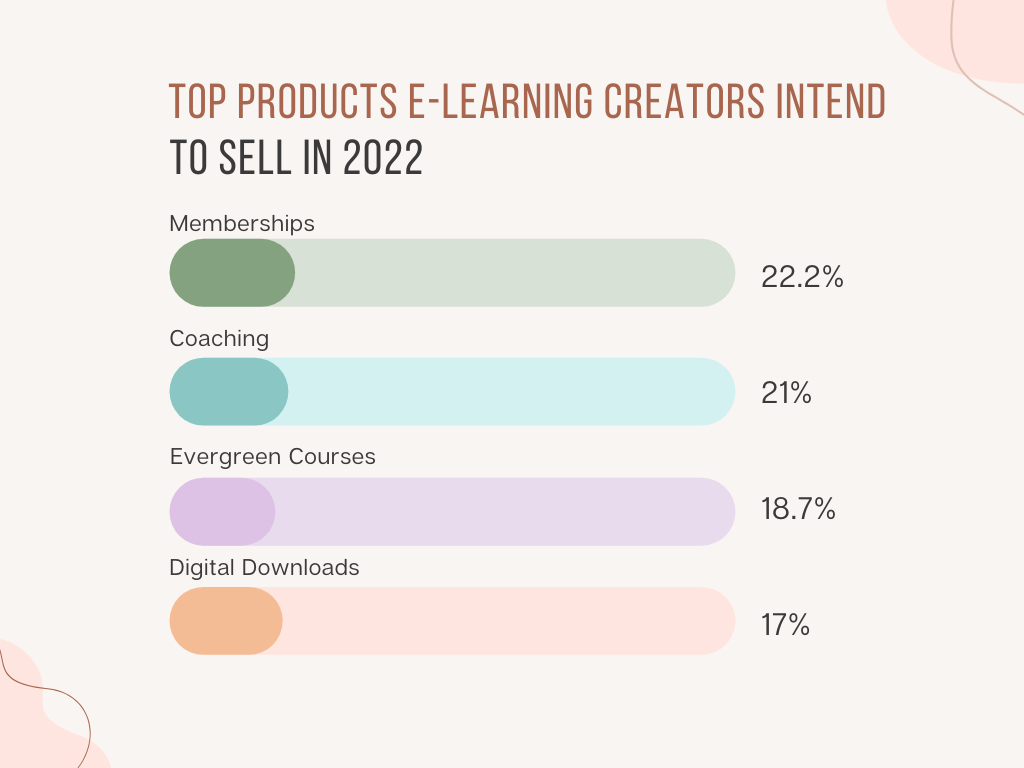
Top creators are broadening their revenue streams, moving from online courses to selling other products and services. Around 83% of the top educational creators already offer multiple services and products. Instead of a single course, creators provide a complete learning package for students, including memberships, interactive sessions, ebooks, physical products, and other complimentary services. Creators use live and scheduled lessons to build a sense of community among students. These small interactions, in turn, build engagement with each other. The end purpose is to create a learning environment to achieve success.
OTT Creator Economy
Most YouTube creators look for different ways to monetize their content. Even when their channel has built a fan following, there is a constant fight to retain the audience. To achieve a sustainable income, creators must navigate their followers from the platform their audience is built on to a place with diversified monetization options. Many creators have perfected the transition to subtly divert a loyal audience towards more financially supported content creation platforms. An OTT platform matches the portfolio of these creators and offers a valuable extension to their earning mediums.
“By 2026, media OTT revenue is expected to surpass $200 billion”
Explore More ✅
Protect Your VOD & OTT Platform With VdoCipher Multi-DRM Support
VdoCipher helps several VOD and OTT Platforms to host their videos securely, helping them to boost their video revenues.
OTT platforms have proven to be a boon for content creators. The OTT space is where talent is respected and rewarded, irrespective of who you are or where you come from. OTT platforms offer a more direct path to audiences than traditional television or movie platforms. This means that creators can build a more direct relationship with their fans and can more easily connect with viewers who are interested in their work. OTT gives content creators a more stable revenue source and chances to reach a larger audience.
Creator Economy Market Size & Statistics
- By 2022, the global digital video content market is expected to reach $204 billion USD
- The total investments in creator economy startups was $1.7 billion in Q2, 2021
- 12% of full-time creators earn more than $50K
- 9% niche creators earn more than $100K in a year
- 68% creators consider themselves part-time creators
- Short-form video is the most engaging content on Instagram
- Online learning market expected to surpass $305 billion by 2025
- 17% of consumers subscribe to a creator’s membership website
- 67% consumers learned about a new product through creator videos
- YouTube paid creators more than $15 billion throughout 2021
- During the pandemic, ad-revenue for creators declined by 31%
- Over 21K YouTube creators have more than 1 million subscribers
- 425% increase in enrollments to online learning courses
- Twitch has over 300K professional streamers
Why do Creators need secure video hosting and video protection?
Video hosting platforms allow users to upload, share, or view videos. Popular video hosting platforms include YouTube and Dailymotion. There are several reasons why video content creators need secure video hosting. One reason is that secure video hosting helps ensure the confidentiality of sensitive information from being accessed by unauthorized individuals. Additionally, secure videos protect learners’ privacy by protecting their personal information from sharing with third-party organizations.
“As per Digital TV Research, by 2022, the total loss from stream piracy will reach $52 billion”
To discourage video piracy and protect your videos from unauthorized access and usage, creators need a secure video hosting platform with additional security and features. The moment someone has access to their premium content, the very next minutes, the content is freely available on the web. Everyone must keep their videos secure, whether they’re vloggers, gamers, individual creators, Ed-tech or media enterprises.
VdoCipher’s Hollywood Grade Video DRM encryption allows you to protect a wide range of video file formats. The videos streamed via VdoCipher cannot be downloaded by any internet plugin or software. DRM technology uses encryption to protect content from unauthorized copying and playback. The user needs a valid DRM license to play the video content with access on only authorized devices. Only people with the appropriate key can decrypt and access the video.
DRM Encrypted Streaming
DRM encrypted streaming uses digital rights management technology to prevent unauthorized copying and playback of digital video content. DRM-protected content is typically streamed over the internet from a content provider to a user’s computer or other devices. The user’s device decrypted the video using a DRM key that the content provider provides. The user’s device then plays the content using a DRM-compliant media player. We offer the highest security from video piracy using Google Widevine and Apple FairPlay DRM.
Dynamic watermarking
Watermarking your videos is yet another great way to protect your videos from being duplicated and let others know who the original owner or creator is. Content creators can add watermarks to their videos to give the branding and restrict others from claiming it as their own. Our dynamic watermark features let you add User name, User IP, and User email to the video. The watermark can be easily customized for movement, colour, size, and transparency.
Smart HTML5 Video Player
Our smart HTML5 video player comes with dynamic controls, Multi-Language Subtitles support, adaptive bitrate streaming, and more. In the Adaptive Multi-bitrate Playback, the media player automatically adjusts the quality of the video stream according to the bandwidth availability. It ensures smooth video playback without any buffering or interruptions. You can easily embed using iFrame, plugins and API.
Easy to integrate Plugins For WordPress/LMS and other CMS
VdoCipher provides easy integration support for many platforms like WordPress, Moodle, Joomla and many others. These plugin let you easy embed your videos and even place customization as per your requirements. For more advanced usage APIs and SDKs are also available.
Content Creators and Social Media Platforms
The relationship between creators and social platforms is simple. The platforms offer the creators a space to reach a broader audience, and in turn, creators supply almost free content for users to engage. This engagement drives the monetization options (advertising) on the platform. Creators use the platform to build fandoms and monetize on the platform. Content creators get a share of the ad revenue, which is nearly 5% of the overall generated revenue on the platform.
In short, social media provides creators with both top-of-funnel and middle-of-the-funnel marketing reach. Creators can choose to publish general content creating awareness about a broad topic. Also, they can target a niche audience by creating content only for that niche. In general, what we see is a combination of both generic and niche content combined with the final product knowledge using the text description in captions, bio, etc.
Tagging a product, retargeting, and other such platform-dependent features have now evolved into social media. Creators and companies that used to publish on social media to create awareness are now directly targeting it for sales. Also, these features are expected to become ubiquitous and enhanced, leading to more sales and commissions.
Types of content produced by creators
| Popular Content Produced by Creators | ||
| Writing | Video & Audio | Social Media |
| 📃 Blogs | Vlogs | Testimonials |
| ✍ White Papers | User-Generated Content | Infographics |
| ✏ eBooks & Guides | Live Streams | Contests |
| ✉ Email Newsletter | Reels | Announcements |
| 📑 Product Content | Tutorials & courses | Social Posts |
| 📁 Case Studies | Interviews | Reviews |
Creator Economy Business Models: How Creators Make Money
The creator economy is no longer dependent only on ad revenue or one-time brand sponsorships. In the early phase of the creator economy, most creators focused on building an audience on platforms like YouTube, Instagram, TikTok, Twitch, or blogs and then monetizing through ads or sponsored content. Today, creators are building more diversified businesses with subscriptions, online courses, paid communities, digital products, merchandise, live events, licensing, and even their own apps or OTT-style platforms.
This shift is important because audience reach alone does not guarantee sustainable income. A creator with millions of views may still struggle with low ad revenue, changing platform algorithms, or inconsistent brand deals. On the other hand, a niche creator with a smaller but loyal audience can often build a more stable business through direct payments, memberships, courses, or premium content.
| Revenue Model | Best For | Pros | Risks |
| Ad revenue | Large-audience creators, YouTubers, bloggers, podcasters | Easy platform-native income; no need to sell directly |
Low RPM, algorithm dependency, revenue fluctuations
|
| Brand sponsorships | Influencers, niche experts, social media creators | High payout potential; works well for trusted creators |
Inconsistent income; can reduce audience trust if overdone
|
| Subscriptions and memberships | Educators, analysts, communities, niche experts | Predictable recurring revenue; stronger audience relationship |
Requires loyal audience and regular content delivery
|
| Online courses | Educators, coaches, trainers, subject experts | High-margin monetization; scalable learning product |
Piracy risk, student support needs, course updates required
|
| Paid communities | Niche creators, experts, coaches, professional communities | Better retention, upsell opportunities, deeper engagement |
Needs continuous moderation and community activity
|
| Digital products | Template creators, designers, educators, writers, tool builders | Scalable, low delivery cost, easy to sell globally |
Easy to copy, share, or distribute without permission
|
| Live events and workshops | Coaches, educators, entertainers, fitness creators, artists | High engagement, premium pricing, real-time interaction |
Operational effort, scheduling, limited scalability
|
| Merchandise and commerce | Lifestyle creators, entertainers, fandom-led creators | Builds creator brand beyond content |
Inventory, fulfillment, quality control, returns
|
| Licensing and IP | Media creators, filmmakers, musicians, AI-era creators, educators | Long-term value from content ownership |
Legal complexity, contracts, copyright management
|
| Own OTT platform, app, or website | Premium video creators, educators, fitness creators, OTT creators | Full control, direct revenue, stronger data ownership |
Requires tech stack, payments, video hosting, and content security
|
The strongest creator businesses usually do not depend on only one revenue stream. A creator may use short-form content for discovery, YouTube for reach, newsletters for retention, courses for monetization, and a paid community or own app for long-term revenue. This is why the modern creator economy is moving from a simple “post and monetize” model to a more complete creator business stack.
For example, an educator may publish free videos on YouTube, collect emails through a free guide, sell a paid course, run live doubt-solving sessions, and host premium recorded videos behind a secure login. Similarly, a fitness creator may use Instagram Reels for reach, sell workout plans, host live classes, and offer a paid app with recorded programs.
Which Creator Monetization Model Should You Choose?
The best revenue model depends on the creator’s niche, audience trust, content format, and willingness to manage operations. Not every creator needs a paid community, merchandise store, or OTT app. The right model should match the creator’s audience behavior and content value.
| Creator Type | Best Monetization Mix |
| Educator |
Online courses + paid community + subscriptions
|
| Fitness creator |
Own app + paid programs + live sessions
|
| Finance creator | Newsletter + courses + consulting |
| Entertainment creator |
Ad revenue + sponsorships + merchandise
|
| Spiritual or wellness creator |
Membership + live events + recorded programs
|
| Kids learning creator | Subscription + secure video library |
| OTT or premium video creator |
SVOD/TVOD + DRM-secured video hosting
|
| Gaming creator |
Live streaming + sponsorships + memberships + merchandise
|
| Podcast creator |
Sponsorships + paid episodes + community + events
|
| B2B expert creator |
Newsletter + consulting + webinars + digital products
|
The Difference Between a Creator and a Creator Business
A creator publishes content. A creator business builds systems around that content.
| Creator | Creator Business |
| Focuses mainly on posting content |
Builds products, funnels, and recurring revenue
|
| Depends on platform reach | Builds owned audience channels |
| Monetizes through ads or sponsorships |
Monetizes through multiple revenue streams
|
| Measures views and followers |
Measures revenue, retention, LTV, and conversion
|
| Works as an individual |
May build a team, tools, and processes
|
| Has limited control |
Owns more of the audience and monetization journey
|
The middle-class creator is usually not struggling because they lack talent. They often struggle because they have not converted attention into a durable business model. A creator with a loyal niche audience can build sustainable income if they choose the right monetization model, protect their premium content, and reduce dependence on a single platform.
How Creators Can Build a More Stable Business
To build a stronger creator business, creators should focus on audience ownership and diversified monetization.
| Strategy | Benefit |
| Build an email list |
Reduces dependence on social media algorithms
|
| Create paid products | Turns expertise into scalable revenue |
| Launch subscriptions or memberships | Builds predictable recurring income |
| Use paid communities | Increases retention and engagement |
| Repurpose content | Gets more value from every idea |
| Build a website or app |
Improves control over audience and data
|
| Protect premium content |
Reduces piracy and unauthorized sharing
|
| Track analytics |
Helps creators understand what converts
|
| Diversify platforms |
Reduces risk from one platform’s policy or algorithm
|
The next phase of the creator economy will not only be about becoming famous. It will be about building sustainable creator-led businesses. The creators who succeed will be those who combine audience trust, niche expertise, multiple revenue streams, owned platforms, and strong infrastructure for payments, content delivery, analytics, and security.
Challenges and Criticisms of the Creator Economy
Market Saturation and Competitiveness
As the creator economy continues to grow, it faces challenges related to market saturation and increased competitiveness. With millions of creators producing content across various platforms, standing out and gaining traction becomes more difficult. This heightened competition can lead to oversaturation in certain niches and make it harder for new creators to establish themselves. While this challenge reflects the vibrant and dynamic nature of the creator economy, it also raises questions about sustainability and the need for differentiation.
Criticisms Regarding Inclusivity and Accessibility
The creator economy has also faced criticisms concerning inclusivity and accessibility. While the internet has democratized content creation to some extent, disparities still exist. Not all creators have equal access to tools, resources, and opportunities. Barriers related to technology, education, and capital can hinder participation for some individuals. Moreover, algorithms and platform policies may inadvertently favor certain types of content or creators. Addressing these issues is crucial for ensuring that the creator economy remains an inclusive and equitable space for all.
Future of the Creator Economy
The creator economy seems to only grow in the future. With increasing monetization platforms and access to tools, creators can make a living off of their content. And as more people become creators, the economy will only grow.
In the future, we may see new monetization mediums and even creators with their own platforms. This will lead to more and more brands and companies partnering with creators to promote their products and services. The future of the creator economy looks promising and full of opportunity.
Creators who can adapt and evolve will be able to thrive in this ever-changing landscape. In the coming times, creators must come up with fresh, engaging and interesting ideas.
- Community-based platforms will grow
- Influencer marketing will become more important
- Demand for content creation tools will increase
- Creator-led brands will gain popularity
- NFTs are likely to play a key role in the creator economy
- Web3 technologies will open new avenues for content creation
Content Format Performance Trends 2025
| Content Type | Engagement Metric | Monetization Trend | Key Platforms |
| Short-Form Video | 50B daily views (YouTube Shorts) | High brand ROI, viral audience growth | YouTube, Reels, Moj |
| Podcasts/Audio | $2.4B U.S. ad revenue | Sponsorships, memberships, live events | Spotify, YouTube, Apple |
| Online Courses | 93% monetize their courses | Premium content, memberships, community learning | Teachable, YouTube, Udemy |
| Livestreaming | 16M monthly subs on Twitch alone | Tips, SuperChats, live commerce | Twitch, YouTube, Kick |
| Hybrid Formats | Long-form + short-form funneling strategy | Converting casual viewers to paying subscribers | Cross-platform |
Latest in the Content Creator Economy
The Creator Economy, once enveloped in widespread enthusiasm, is now facing the harsh realities of an economic downturn. This sector, defined by its digital content creators ranging from bloggers and YouTubers to podcasters and social media influencers, is reportedly struggling as investments wane and economic conditions worsen.
Investor interest is declining, with the valuation of new startups falling significantly from previous highs. For instance, the era of startups achieving $1.3 billion valuations merely for their potential seems to be over. Additionally, the infrastructure supporting these creators, heavily reliant on venture capital, is also at risk as funding dries up.
Challenges Faced by the Creator Economy
- Economic downturns and reduced investment levels are pressuring all sectors, but the Creator Economy feels it acutely due to its reliance on discretionary spending. As consumers tighten their belts, spending on subscriptions and sponsored content can decline, which directly affects creator revenues.
- Market saturation is another significant challenge. With low barriers to entry, new creators are constantly emerging, making it increasingly difficult to capture and retain audience attention.
- The reliance on algorithmic platforms means that changes in platform algorithms can dramatically alter a creator’s visibility and revenue overnight, which adds an element of unpredictability to their earnings.
The Myth of a Non-existent Middle Class
A critical issue highlighted is the absence of a well-defined middle class within the creator community. The viability of content creation remains feasible primarily for the top-tier creators, leaving those in the middle struggling to find their footing. This disparity is emphasized by the example of the “37th best finance creator,” who, despite being highly ranked, faces significant challenges in standing out and securing a sustainable income.
- The notion that only the top creators make a viable living overlooks the experiences of thousands of mid-tier creators who carve out comfortable niches. These creators often benefit from highly engaged, though smaller, audience bases that can offer more sustainable and predictable income streams through direct support mechanisms like Patreon and memberships.
- Diversification strategies are critical here; successful mid-tier creators often spread their presence across multiple platforms and revenue streams, reducing their vulnerability to changes in any single channel.
- Community building is also a vital strategy for these creators. By fostering a strong sense of community, mid-tier creators can enhance audience loyalty and increase the willingness of followers to support them financially.
The Creator Middle Class Problem
The creator economy is often presented as a massive opportunity where anyone can build an audience and earn independently. While this is partly true, the income distribution in the creator economy is highly unequal. A small percentage of top creators earn large amounts through brand deals, ad revenue, product lines, subscriptions, and licensing, while a much larger number of creators struggle to make consistent income.
This gap is often called the creator middle class problem.
The issue is not that creators cannot earn money. Many do. The real issue is that creator income is often unstable, uneven, and concentrated at the top. A creator may have thousands of followers and still not earn enough to treat content creation as a full-time business. At the same time, a niche creator with a smaller but highly engaged audience may earn more than a creator with a larger but less loyal following.
Creator Economy Income Tiers
| Creator Tier | Typical Reality |
| Top creators |
Build large teams, product lines, companies, media brands, and licensing deals
|
| Upper mid-tier creators |
Earn from multiple streams such as sponsorships, courses, subscriptions, consulting, and events
|
| Mid-tier creators |
Have audience trust but need better monetization systems to create stable income
|
| Small creators |
May earn occasionally through sponsorships, affiliate links, or digital products
|
| Hobby creators |
Create mainly for passion, identity, networking, or future opportunities
|
The creator middle class problem becomes clearer when we separate attention from income. Views, likes, and followers do not always translate into sustainable revenue. A viral video may generate attention, but not necessarily long-term income. A creator may have a large audience but still depend on unpredictable ad rates or platform algorithms.
Challenging the Negative Outlook
Critics of the creator economy, like Kantrowitz, cite shrinking advertising markets and a faltering middle class as signs of decline. However, this narrative is challenged by data indicating that the advertising sector, while slowing, is still growing. Moreover, platforms like YouTube continue to see robust payouts, with significant sums being paid to creators annually.
- While some focus on the contraction of advertising budgets, they fail to account for the rise of alternative monetization strategies that creators are increasingly tapping into. These include direct sales, e-learning courses, and premium content models, which can be more resilient to economic downturns.
- It is also essential to recognize the resilience of niche markets within the Creator Economy. Certain niches continue to experience growth despite broader economic challenges, driven by specific audience needs and evolving content trends.
- The expansion of global internet access is continually opening new markets where creators can find fresh audiences and untapped opportunities for monetization.
Analyzing the Investment Trends
- While the overall venture funding landscape has seen a retreat, this needs to be viewed in context. Not all sectors are experiencing this equally, and within the Creator Economy, areas like educational technology and digital marketplaces are still attracting significant interest. The decline in some high-profile investments should not overshadow the continued investment in foundational technologies such as streaming infrastructure, content management systems, and creator-focused fintech solutions developed with expertise from a FinTech software consultancy.
- Historical cycles suggest that investment in innovation does not cease but rather shifts towards supporting sustainable growth and profitability in response to economic pressures.
Sustainability of the Creator Economy Infrastructure
- The robustness of the Creator Economy’s infrastructure is often underappreciated. Platforms like Stripe and WordPress not only continue to operate but actively expand their services to better meet creator needs, such as integrating more advanced payment and monetization options.
- New developments in content delivery technology, including augmented reality and virtual reality, promise to open up novel content interaction modes that could rejuvenate interest and engagement among audiences.
- Furthermore, the success of platforms such as Patreon and Twitch showcases the viability of models centered around direct audience support, which lessens reliance on traditional advertising and enhances sustainability.
Recent Shifts in the Creator Economy
The creator economy continues to expand and evolve rapidly in 2025, with growth visible both globally and in India. Globally, the creator community now exceeds 200 million people. This surge is fueled by ubiquitous internet access and easy-to-use platforms. In fact, the global creator economy market size reached about $190 billion in 2024 and is on track for $224 billion in 2025.
Major social platforms like YouTube, Instagram, and TikTok have become mainstream media channels, and short-form video’s popularity underscores this – it’s expected to account for roughly 90% of internet traffic by 2025, according to industry forecasts. (vidico.com).
Brands are shifting marketing budgets accordingly: influencer marketing spend in the U.S. is projected at $7.1 billion in 2024 (up ~16% YoY) and global figures are climbing as well. Overall, content creation has firmly moved from niche to mainstream, with creators now viewed as serious entrepreneurs and media brands in their own right.
India’s creator economy is experiencing an especially explosive rise. From just 962,000 influencers in 2020, India’s creator community ballooned to 4.06 million in 2024 – a staggering 322% growth in four years.
Easier, cheaper internet access and a young, tech-savvy population have unlocked “lakhs” of new creators on YouTube, Instagram, and indigenous platforms. Categories like entertainment, tech, fashion, and gaming are booming in India’s influencer market. Gaming influencers grew to 467,000 by 2024 (213% growth since 2020), and travel influencers rebounded 212% in 2023 post-pandemic. Even niche segments are on the rise – for instance, “infotainment” influencers in India reached 203,000 by 2024 (126% growth) and finance-focused creators hit 232,000 (91% growth).
Top creators are no longer just hobbyists posting content – many have become full-fledged media businesses. Industry observers note that “a creator is essentially their own media company these days.” Major figures like MrBeast or Kai Cenat now operate teams, launch product lines, and ink sophisticated brand partnerships.
In fact, 88% of creators (in one survey) have created their own product or service, and 93% of marketers plan to co-create products with creators going forward. Influencer marketing is shifting from one-off sponsored posts to long-term brand ambassadorships, indicating a more integrated and stable ecosystem. Additionally, creators are diversifying their content formats – even as short videos dominate, long-form content like podcasts and streaming shows is resurging (e.g. the popularity of multi-hour video podcasts).
| Metric | Value |
| Global Creator Population | 200–300 million |
| Global Market Size (2023) | $250 billion |
| Projected Global Market Size (2027) | $480–500 billion |
| Projected Long-Term Value | $2.5 trillion by 2030s |
| India Market Value (2025) | $1.4–1.5 billion |
| India Influencer Count (2024) | 4+ million |
| YouTube India GDP Impact (2021) | ₹10,000 crore (~$1.3B), 750K jobs |
| Indian Govt. Creator Fund (2025) | $1 billion fund announced |
| Creators Monetizing Content | 52% |
| Creators Earning >$50K/year | 12% |
| Influencer Marketing Spend (US, 2024) | $7.14 billion |
| Influencer Marketing Spend (Global, 2024) | $20–24 billion |
| Social Media Active Users (2024) | 4.2+ billion users |
Why Many Creators Struggle to Build Stable Income
| Problem | Why It Matters |
| Algorithm dependency |
A sudden platform change can reduce reach and revenue
|
| Low ad revenue |
Many creators need millions of views to earn meaningful income
|
| Irregular sponsorships |
Brand deals can be seasonal or inconsistent
|
| Weak audience ownership |
Followers belong to the platform, not fully to the creator
|
| Content burnout |
Creators must publish constantly to stay visible
|
| Lack of business skills |
Many creators are strong at content but weak at pricing, sales, operations, or retention
|
| Piracy and content leakage |
Paid courses, videos, and digital products can be copied or shared
|
| Platform risk |
Account bans, demonetization, or policy changes can affect income overnight
|
This is why many creators are now trying to move beyond platform-dependent income. Instead of depending only on ads or sponsorships, they are building email lists, paid communities, online courses, digital products, consulting offers, merchandise, apps, and independent websites.
How AI Is Changing the Creator Economy
Artificial intelligence is becoming one of the biggest forces shaping the creator economy. Earlier, creators needed separate teams or tools for scripting, editing, design, translation, analytics, and audience management. Today, AI tools can help individual creators and small teams produce more content, repurpose existing content, localize videos, generate thumbnails, analyze audience behavior, and automate parts of their workflow.
This does not mean AI will replace creators completely. Instead, it is changing what creators spend time on. Routine production tasks are becoming faster, while differentiation, trust, personality, original thinking, niche expertise, and audience relationships are becoming more valuable.
How Creators Are Using AI
| Area | How AI Helps Creators |
| Content ideation |
Finding topics, hooks, titles, outlines, and content gaps
|
| Scriptwriting |
Drafting video scripts, podcast outlines, newsletters, and social posts
|
| Video editing |
Auto-cutting clips, removing pauses, adding captions, creating short-form videos
|
| Design |
Creating thumbnails, banners, social graphics, and visual concepts
|
| Translation and dubbing |
Reaching multilingual and regional audiences
|
| Repurposing content |
Turning long videos into Shorts, Reels, blogs, carousels, and newsletters
|
| Audience analysis |
Understanding comments, engagement patterns, and content performance
|
| Community management |
Drafting replies, summarizing discussions, and managing FAQs
|
| Product creation |
Creating templates, ebooks, guides, worksheets, and course material
|
| Personalization |
Creating different versions of content for different audience segments
|
For creators, AI reduces the cost and time required to produce content. A solo creator can now do work that previously required an editor, designer, copywriter, translator, and social media assistant. This is especially useful for educational creators, coaches, podcasters, newsletter writers, and small media teams.
The Positive Impact of AI on Creators
AI gives creators the ability to scale their work faster. A long-form YouTube video can be converted into short clips, a blog post, LinkedIn posts, email newsletters, and course notes. A creator can translate content into multiple languages and reach audiences beyond their original geography. Educators can create quizzes, summaries, lesson plans, and personalized learning material more efficiently.
This is especially important for creators in India and other multilingual markets. A creator who starts with Hindi content can use AI-assisted translation, dubbing, and subtitling to reach Tamil, Telugu, Bengali, Marathi, Malayalam, Kannada, and English-speaking audiences. Similarly, a finance, fitness, or education creator can use AI to create beginner, intermediate, and advanced versions of the same topic.
The Risks of AI in the Creator Economy
AI also creates new challenges. When content creation becomes easier, the internet becomes more crowded with average-quality content. This increases competition and makes it harder for creators to stand out. Audiences may also become more skeptical of generic AI-generated content, especially in areas like finance, health, education, and legal advice where trust and accuracy matter.
| Risk | Impact |
| Content saturation |
More creators and brands publish similar AI-generated content
|
| Loss of originality |
Content may sound generic or repetitive
|
| Misinformation |
AI-generated claims may be inaccurate if not verified
|
| Deepfakes and identity misuse |
Creator likeness, voice, or style can be copied
|
| Copyright issues |
Ownership of AI-generated content can become unclear
|
| Trust gap |
Audiences may prefer creators with real experience and personality
|
| Platform quality filters |
Low-quality AI content may be downranked or ignored
|
FAQs
Name of some of the famous creator economy startups.
Beacons, Buy me a Coffee, and Patreon are some of the creator economy startup examples.
What are some of the editing creator tools for YouTubers?
The most common tools used for editing are iMovie, Final Cut Pro and Adobe Premiere Rush.
Why do creator videos require DRM encryption?
Video creators need DRM encryption to protect their content from online video piracy. DRM encryption ensures that only authorized users access and view the content and that unauthorized users cannot copy or distribute the content. It secures the video against unauthorized access and copyright infringement. When the video is properly secured from hackers, there is boost in generated revenue.
What are the challenges of the creator economy?
The creator economy challenges include the need for creators to constantly create unique content to hold the audience and more platforms to support a wide range of content types with monetization methods that work for both creators and platforms. To have uniformity across the sector, there needs to be standard and well-established practices.
Which is the biggest platform for creators?
According to Statista, Instagram has the most creators ( more than 30 million), followed by YouTube with over 12 million creators.
How many creators earn more than $1 million?
Roughly 0.5% of creators make over $1 million annually, while those earning between $500K-1M are nearly 1.7% of the creator economy.
References:
- https://influencermarketinghub.com/state-of-the-creator-economy/
- https://linktr.ee/creator-report/
- https://www.springboard.com/blog/business-and-marketing/creator-economy/
- https://stripe.com/blog/creator-economy
- https://www.thinkific.com/wp-content/uploads/2022/04/online-learning-trends.pdf
Supercharge Your Business with Videos
At VdoCipher we maintain the strongest content protection for videos. We also deliver the best viewer experience with brand friendly customisations. We'd love to hear from you, and help boost your video streaming business.

Jyoti began her career as a software engineer in HCL with UNHCR as a client. She started evolving her technical and marketing skills to become a full-time Content Marketer at VdoCipher.